

Understanding the Word of God
Sermons are preached on Sundays as well as at other special services. They are posted below
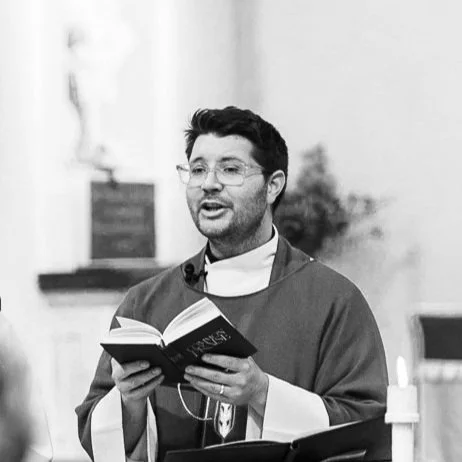

Roses are yours, violets are mine, St Valentine died in 269….
Jeremiah 17: 8-10, Psalm 1, Luke 6: 17-26 (The sermon on the Plain begins…)
Roses are yours, violets are mine, St Valentine died in 269.
Or did he?
I’m sure you all know that it was Valentine’s Day this week. This is the week when roses are twice as expensive as the rest of the year, restaurants are hard to book, and you learn that most things from chocolates to toilet roll can in fact be made in the shape of a heart. And all because of St Valentine, who might have died in the year AD 269.
I say might because the details about Valentine are sketchy. The first account of a life of someone called Valentine appears about 200 years later. There is a story that he might have been a priest and a doctor who was martyred by the Emperor Claudius II because he refused to stop converting people to Christianity, including his jailor’s daughter to whom, so later stories go, he wrote a letter, signing it, ‘from your Valentine’.
There is another story that he was a bishop from Terni, in Italy, who was martyred in Rome, at least partly because he refused to stop marrying Christian couples against the wishes of their pagan families.
And the possibilities don’t end there. There are at least 9 saints called Valentine, or a name like it, identified by the early church and recorded in lists of martyrs about whom not much else is know except that they were put to death for their faith. The roses, cards, and novelty menus didn’t put in an appearance until much later. But in a sense it doesn’t matter which Valentine we celebrate on the 14th of February, whether they were a Bishop or doctor, or anything else. What we do know is that there were plenty of Valentines who lived up to their names, Valens meaning strong, robust, courageous. There were plenty of Valentines who lived up to their names and held to their faith even to the point of death.
By chance this Sunday we are given one of the more appropriate readings in the whole year of readings to accompany the remembrance of these Valentines, from Jesus’ little section of teaching often called the ‘sermon on the plain’;
“Blessed are you when people hate you, and when they exclude you, revile you, and defame you on account of the Son of Man.”
This passage has a much more famous cousin called the sermon on the mount- that’s the one St Matthew wrote in his Gospel. In that version Jesus goes up a hill, and teaches the crowd assembled below. Here in Luke’s Gospel Jesus has just been up a mountain, choosing the 12 disciples, and comes back down to sea level. Then he teaches not the whole crowd, but just the disciples. There are other differences too: This is a more immediate, punchier, shorter sermon, and each of the blessings is counter-weighted with an accompanying ‘woe’ or ‘sorrow’. ‘Blessed are you poor – woe to you rich. Blessed are you who are hungry – woe to you who are full. Blessed are you who weep – woe to you who are laughing. Blessed are you when people hate you – woe to you when all speak well of you.’
At first glance this sermon is a council of despair for most of us who are not made of the same stuff as those early Valentines. Am I rich? Well, in most global terms however you cut it, yes. Am I full? Yes, mostly too much so. Do I laugh? Often. Am I spoken well of? Far more than I deserve.
But- we might have wanted to ask our Lord if we were there on the plain with him- is poverty something to aspire to? Is famine a moral condition more worthy than being nourished? Is misery to be commended above joy? Or seeking notoriety for the sake of being disliked? When all is said and done, what sort of misanthropic mission is being encouraged here?
I fear that faced with these questions Jesus would say we haven’t understood what he’s saying at all.
Like so much of St Luke’s Gospel, what is being held up is a contrast between present and future; the illusion of present reality, verses the reality of God’s future kingdom. If we think back to Advent, before Christmas had arrived and the turkey was still in the freezer, we heard the Magnificat, the song of Mary, Luke chapter 1 verse 46 and onwards. This song is Mary’s manifesto for her manifestation of the mad message of the angel saying ‘you will bear a son and you will call him Emmanuel – God with us’. The Magnificat sets out what we are to expect God’s kingdom to look like. The humble raised up, the mighty cast down, the hungry filled with good things, the rich sent empty away. Jesus’ sermon is true to this vision. But it is not just a pipe dream for some time in the future. You see, along with this contrast between the present and the future runs a contrast between human values and the values of God.
What is the recipe for happiness? A reasonable person would surely answer, ‘prosperity, comfort, peace of mind, and popularity.’ But Jesus didn’t come to be reasonable, and ‘=]]]]]]]]pronounces his blessing on those who fail to find their satisfaction in these goals. What Mary sings for, what Jesus teaches his new disciples to seek, is not the settled wisdom of a world too often satisfied with injustice as long as it applies to other people. Christ invites us to be citizens of a new world that begins in him where the poor are not cheap, and the hungry are not ignored.
The real St Valentine, whichever one was celebrated this week, heard these same words of Jesus that we hear today. He knew that this king does not promise a way of wealth, or glory, or even personal fulfilment; only a road to afflictions and trials. But, like Mary, Alban, Amphibalus, and countless others after them, Valentine found in Christ the reality of a new way of living, a way not driven by fear but hope; hope that the rich promises of the beatitudes are fulfilled. Hope that praying ‘thy kingdom come’ will mean nothing less than a new heaven and a new earth.
Roses are red, violets are blue, but the life of God’s kingdom is offered to you.

Sunday 16th February, 4 before Lent
Here I am Lord, is it I Lord? I have heard you calling in the night. I will go Lord, if you lead me, I will hold your people in my heart.
You probably know this hymn. Written in 1981, Here I am Lord quickly became a global hit for the Dan Schutte, a member of the St Louis Jesuits in America, from the album Earthen Vessels, which I’m told outsold Elton John’s Ice on Fire, and has found its way into every Church of England hymnbook published since. It’s a modern classic. Here I am Lord, is it I Lord? I have heard you calling in the night.
I nearly put it down for us to sing today. Nearly. In the end my courage failed; the director of music is a very reasonable man but we had it twice towards the end of last year and if I overplay my hand I am in serious danger of being on the receiving end of a raised eyebrow. So we’ll wait a couple more months until he’s forgotten.
Anyway, I nearly put this hymn down for today because of our first reading, from Isaiah chapter 6 which tell of the prophet being lifted into a vision of the heavenly presence of God, ending with the lines ‘And I heard the voice of the Lord saying, ‘whom shall I send, and who will go for us? And I said, here am I; send me!’’. Dan Schutte echoes these words and turns them into his famous ditty about being sent out to do something vague, but to do it nicely- I will go Lord, if you lead me, I will hold your people in my heart, and so on.
The trouble though, and another reason it’s not on the list today in the end, is that it doesn’t get what’s happening in Isaiah 6 quite right. This isn’t just a passage about heaven, not really, or vocation, about being chosen to go out in the service of the Lord. Isaiah’s being chosen to be God’s messenger is important, but it isn’t the whole story. To understand that we need to go to the beginning of the chapter.
It begins with the description of the prophet Isaiah’s heavenly vision, ‘In the year that King Uzziah died, I saw the Lord, sitting on a throne, high and lofty… and I said, woe is me, for I am a man of unclean lips, and I live among a people of unclean lips, yet my eyes have seen the King, the Lord of hosts.’ It’s the first part that’s really important here, the bit we can miss so easily. In the year that King Uzziah died, I saw the Lord.
You see, the writer of Isaiah isn’t placing King Uzziah into the narrative here to add a bit of historical ballast, letting us know that this is about the year 750BC. No, he’s there to make a point. Uzziah was the 10th King of Judah, and had been crowned when he was just 16 years old. He was, as is so often the way, a brilliant king. To start with.
He listened to his prophets, he inspired the army to great military feats, he pushed back the borders of Judah, he brought prosperity and peace to the land.
But then he got carried away. Uzziah got ideas above his station, thought he could get rid of the priests that served in the temple and go into the presence of God to offer incense on the altar himself, in contravention of the law that only the priests of the tribe of Levi could do this.
It is a fearful and dangerous thing to enter into the presence of God.
But Uzziah forgot that, thought after all he’d achieved that kings and God could look each other in the eye, pass as equals, you know, so into the temple he marched with his incense and his status and his ego all trailing behind him. And, as the second book of Chronicles tells us, he was promptly struck down with a deadly disease and died soon after. Uzziah’s problem was a failure of humility. Which is why it is important that Isaiah tells us he had his vision of God the year that Uzziah died.
Uzziah presumed he could march in and offer incense; Isaiah is gifted a vision of the presence of God, but instead of saying, great let me join in, he falls to his face and says, ‘woe is me for I am a man of unclean lips, yet my eyes have seen the King, Lord of hosts!’. It is only after he has been cleansed, the fire of the hot coal touching his mouth, blotting out his sin, that Isaiah is ready to answer God’s question, ‘whom shall I send?’
Isaiah’s vision of heaven is not a comforting one, there is no cheering chorus in G major to accompany it. Isaiah gives us fear, the pivots of the thresholds shaking, the awesome presence of the Lord of hosts, the searing heat of God’s forgiveness. Whether you are king or cobbler, to follow the call of God is first to be changed. Our need for humility before God is what Isaiah’s vision is all about. It is the beginning of vocation, the beginning of true relationship.
On the face of it, the Gospel reading from Luke couldn’t be more different. This is no heavenly vision, just a bad day at the office for some fishermen who are cleaning their nets when Jesus walks by and tells them to put out again, into the deep water. But Luke’s call of the first disciples, different to Mathew, Mark and John’s, is I think deliberately set up to give those with ears to hear an echo of Isaiah. While everyone is astounded by the miraculous catch of fish, distracted by the abundance of the miracle that unfolded in front of them, Peter’s reaction is the same as Isaiah’s- he recognises who it is that has climbed into his boat, who is truly is, falls to his face, and says ‘Go away from me Lord, for I am a sinful man!’.
If you read Luke’s Gospel through you’ll see that this is one of his key themes; true discipleship begins with humility. Each true encounter with Jesus, when people have seen past the glitz and the glamour of the crowds and the miracles, begins with a profound understanding of the need for humility in the face of this extraordinary person. It is the seed of true discipleship- the willingness to be changed by following Jesus.
Each Sunday as we come to receive the sacrament, and to hear the word of God, we are called to refresh our discipleship, to be honest about our sin, and then to hear the words of Christ’s forgiveness that not only calls us to stand and follow him, but also to sit and eat at his table. Every week we are invited again to receive the gift of life from the only one whose invitation makes us worthy to receive it. To renew our discipleship, to eat and to follow. In humility let us approach the throne of his grace, ransomed, healed, restored and forgiven. Then we’ll be ready to sing again the words of that hymn: I will go Lord, if you lead me, I will hold your people in my heart.